

East Africa is the birthplace of the safari—a region so rich in wildlife, landscapes, and cultural heritage that it leaves every traveller forever changed. From the snow-capped peak of Kilimanjaro to the misty gorilla forests of the Virungas, this corner of the continent holds an extraordinary diversity of experiences packed into four remarkable countries.
Whether you dream of watching a lioness stalk zebra on the golden plains of the Maasai Mara, standing at the rim of the Ngorongoro Crater as the sun rises over its extinct caldera, trekking through dense jungle to sit eye-to-eye with a mountain gorilla in Bwindi, or exploring the ancient rainforest canopy of Nyungwe—each destination offers a completely unique chapter of the East African story.
Kenya: The Original Safari Destination
Kenya is where the safari was born and remains one of Africa's most iconic wildlife destinations. From the sprawling savannah of the Maasai Mara to the elephant-studded wetlands of Amboseli, Kenya offers an unmatched variety of landscapes and game-viewing opportunities. The country is home to over 50 national parks and reserves, each offering a distinct ecosystem and wildlife experience.
Maasai Mara National Reserve
The Mara is Kenya's crown jewel and arguably the most famous wildlife reserve on the planet. Spanning 1,510 square kilometres of rolling grasslands and acacia-dotted plains, it hosts the Great Migration from July to October when millions of wildebeest and zebra thunder across the Mara River. Beyond migration season, the Mara delivers exceptional year-round game viewing with resident prides of lion, leopard, cheetah, and vast elephant herds. The Mara Triangle, managed by the Mara Conservancy, offers a more private wilderness experience with fewer vehicles.
Amboseli National Park
Famous for its vast elephant herds set against the iconic backdrop of Mount Kilimanjaro, Amboseli is one of Kenya's most photogenic parks. The park's seasonal lake and swamp systems support an incredible concentration of wildlife including buffalo, zebra, giraffe, and over 400 bird species. Amboseli is also home to the Maasai community, and cultural visits to nearby villages offer insight into one of Africa's most enduring traditional cultures.
Samburu National Reserve
Located in Kenya's northern frontier, Samburu is a starkly beautiful semi-arid landscape cut through by the Ewaso Nyiro River. The reserve is renowned for its "special five"—species uniquely adapted to this arid environment: the Grevy's zebra, reticulated giraffe, Beisa oryx, Somali ostrich, and gerenuk. The riverine forest attracts large elephant herds and offers excellent leopard sightings.
Tsavo National Park
One of the largest protected areas in the world, Tsavo is split into Tsavo East and Tsavo West. Tsavo East is characterised by vast open plains, red dust, and the dramatic Yatta Plateau. Tsavo West offers more varied terrain with volcanic hills, natural springs, and the famous Mzima Springs where hippos and crocodiles can be viewed from an underwater observatory. Together, the Tsavo ecosystem is home to Kenya's largest elephant population.
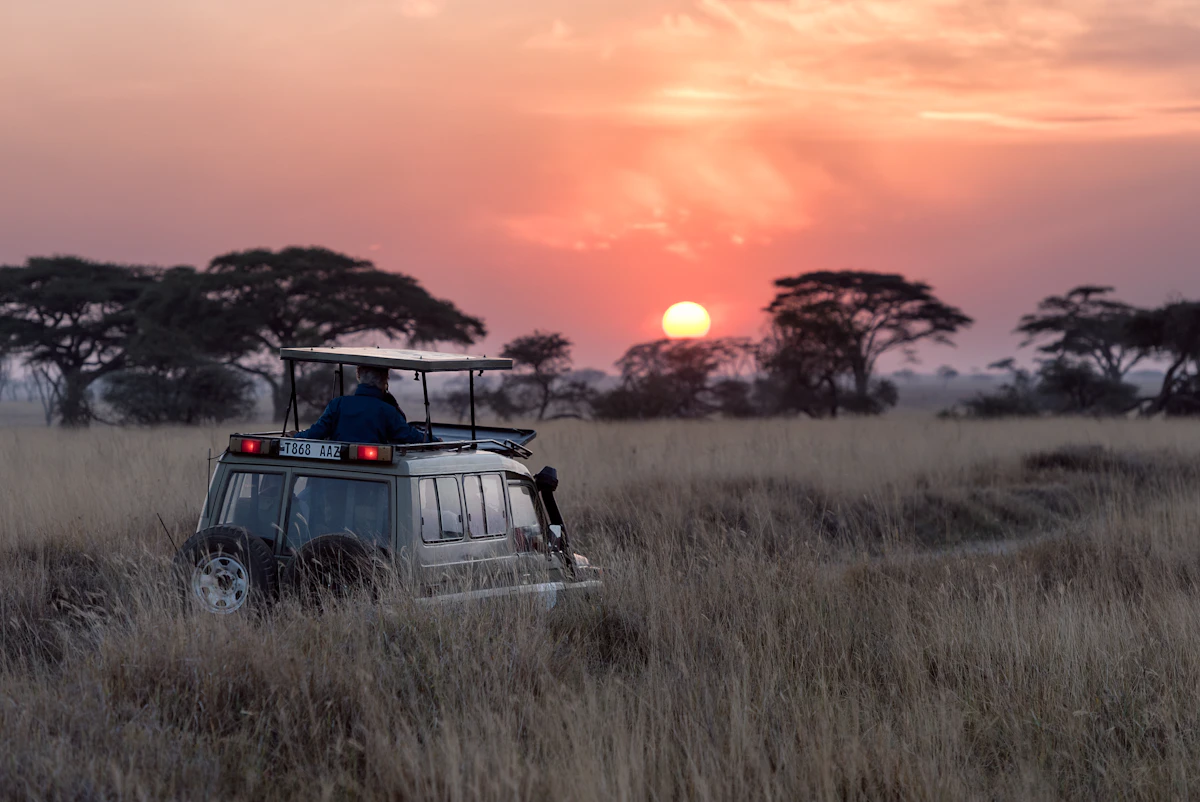
Elephants silhouetted against Mount Kilimanjaro at sunset in Amboseli National Park, Kenya.
Tanzania: Wilderness on a Grand Scale
Tanzania is East Africa's largest country and home to some of the continent's most celebrated wilderness areas. The Serengeti ecosystem alone covers 30,000 square kilometres, while the Ngorongoro Crater is often called the "Eighth Wonder of the World." Tanzania also offers pristine beaches, lush highlands, and the spice-scented islands of Zanzibar.
Serengeti National Park
The Serengeti is the undisputed heart of African wildlife tourism. This 14,763-square-kilometre park hosts the Great Migration and offers some of the most spectacular predator sightings on earth. The park is divided into distinct regions: the short-grass plains of the south (calving season, January-March), the central Seronera Valley (excellent year-round game viewing), the western corridor (Grumeti River crossings, June-July), and the northern Lobo area (Mara River crossings, August-October). Each region offers a completely different experience.
Ngorongoro Crater
The Ngorongoro Crater is a massive unbroken volcanic caldera that formed two to three million years ago. Its steep walls enclose an area of 260 square kilometres that supports an estimated 30,000 large mammals, including the highest density of lions and hyenas in Africa. The crater floor is a self-contained ecosystem where you can spot the Big Five in a single morning. Nearby Empakaai Crater and Olmoti Crater offer hiking and breathtaking viewpoints.
Tarangire National Park
Tarangire is Tanzania's hidden gem, particularly during the dry season (June-October) when the Tarangire River becomes a magnet for wildlife. The park is famous for its massive elephant herds (some groups number over 300 individuals) and its ancient baobab trees that dot the landscape like silent sentinels. Tarangire also hosts an incredible density of birdlife and is excellent for seeing lions lounging in the branches of sausage trees.
Zanzibar Archipelago
Zanzibar is the perfect finale to any Tanzanian safari. The main island of Unguja offers pristine white-sand beaches, turquoise waters, and the historic Stone Town with its labyrinthine alleys, spice markets, and Swahili architecture. Beyond the beaches, you can snorkel in the Mnemba Atoll, take a spice tour, or visit the Jozani Forest to see the endemic red colobus monkey.
Uganda: The Pearl of Africa
Winston Churchill famously called Uganda the "Pearl of Africa" for its stunning beauty and biodiversity. While best known for mountain gorilla trekking, Uganda offers a remarkably diverse safari experience spanning dense rainforests, vast savannahs, and the source of the mighty Nile.
Bwindi Impenetrable National Park
Bwindi is one of the most extraordinary wildlife destinations on earth. This UNESCO World Heritage Site protects roughly half of the world's remaining mountain gorilla population—approximately 500 individuals spread across 19 habituated family groups. The gorilla trekking experience in Bwindi is profoundly moving: hiking through dense, misty jungle before encountering a silverback and his family going about their daily lives just metres away. Permits are limited and strictly regulated, making this one of Africa's most exclusive wildlife encounters.
Queen Elizabeth National Park
Queen Elizabeth is Uganda's most visited savannah park, spanning 1,978 square kilometres of diverse habitats including savannah, wetlands, and forests. The park's highlights include the Kazinga Channel boat safari, where enormous concentrations of hippos and elephants can be seen from the water, and the Ishasha sector, famous for its tree-climbing lions that lounge in the branches of fig trees. The park also offers chimpanzee trekking in the Kyambura Gorge.

A silverback mountain gorilla in the dense rainforest of Bwindi Impenetrable National Park, Uganda.
Rwanda: The Land of a Thousand Hills
Rwanda is a country of breathtaking beauty, with terraced hillsides rolling into emerald-green valleys. Despite its small size, Rwanda punches well above its weight in wildlife and adventure. It offers the most accessible mountain gorilla trekking in the world, along with Africa's largest protected wetland and one of the continent's oldest rainforests.
Volcanoes National Park
Volcanoes National Park is Rwanda's premier wildlife destination and home to the Virunga mountain gorilla population. Situated in the northwest of the country within the Virunga Mountains, the park protects five volcanoes and the montane forests that blanket their slopes. Gorilla trekking here is arguably the most accessible in the region, with Kigali just a two-hour drive from the park headquarters. In addition to gorillas, Volcanoes National Park offers golden monkey tracking, hikes to the Dian Fossey grave site, and the challenging climb to the summit of Mount Bisoke.
Nyungwe National Park
Nyungwe is one of Africa's oldest montane rainforests, covering 1,019 square kilometres of pristine wilderness. The park is a primate haven, home to 13 species including large troops of Angola colobus and chimpanzees. Nyungwe's canopy walkway, suspended 50 metres above the forest floor, offers a unique perspective on this ancient ecosystem. The park also boasts over 300 bird species and the source of the Nile River at the iconic Kamiranzovu Swamp.
Akagera National Park
Akagera in eastern Rwanda has undergone one of Africa's most remarkable conservation turnarounds. Once decimated by poaching, the park has been restored through a partnership between the Rwanda Development Board and African Parks Network. Lions and black rhinos have been successfully reintroduced, and today Akagera offers Big Five game viewing in a stunning landscape of savannah, lakes, and papyrus swamps. The park's boat safari on Lake Ihema provides excellent hippo and crocodile viewing.
East Africa Destination Comparison
Use this quick-reference table to compare the best destinations across all four countries at a glance.
| Destination | Country | Best Time | Top Activities |
|---|---|---|---|
| Maasai Mara | Kenya | Jul–Oct | Migration crossings, Big Five, hot air balloon |
| Amboseli | Kenya | Jun–Oct | Elephant photography, Kilimanjaro views, Maasai visits |
| Samburu | Kenya | Jul–Oct | Special five, leopard viewing, cultural encounters |
| Tsavo | Kenya | Jun–Sep | Red elephants, Mzima Springs, volcanic landscapes |
| Serengeti | Tanzania | Year-round | Migration, big cats, balloon safaris, walking safaris |
| Ngorongoro | Tanzania | Jun–Sep | Crater floor game drives, Maasai culture, highland hikes |
| Tarangire | Tanzania | Jul–Oct | Elephant herds, baobabs, birding, walking safaris |
| Zanzibar | Tanzania | Jun–Oct | Beach relaxation, Stone Town, snorkelling, spice tours |
| Bwindi | Uganda | Jun–Aug | Gorilla trekking, birding, Batwa cultural experience |
| Queen Elizabeth | Uganda | Jan–Feb | Tree-climbing lions, Kazinga Channel boat safari, chimp tracking |
| Volcanoes NP | Rwanda | Jun–Sep | Gorilla trekking, golden monkeys, volcano hikes |
| Nyungwe | Rwanda | Jul–Sep | Canopy walkway, chimpanzee tracking, birding, waterfalls |
| Akagera | Rwanda | Jun–Sep | Big Five, boat safaris, lake views, birding |
👁 Guide Insight: Choosing the Right Country
First-time visitors often ask which country to choose. The answer depends on your priorities. Kenya offers the most accessible and varied circuit with excellent infrastructure. Tanzania delivers vast, uncrowded wilderness and the best migration experience. Uganda and Rwanda offer once-in-a-lifetime gorilla encounters combined with unique primate-focused itineraries. For the ultimate East African experience, combine two or three countries in a single trip.
Frequently Asked Questions
Quick answers to the most common questions about East Africa safari destinations.
Kenya is the most popular choice for first-time safari-goers due to its excellent infrastructure, well-established conservancies, and the iconic Maasai Mara. Tanzania offers a more remote, wilder experience. Both are exceptional—your choice should depend on your budget, timing, and specific interests.
We recommend a minimum of 7 to 10 days for a single-country safari and 12 to 14 days for a multi-country itinerary. This allows enough time to explore two to three distinct regions, acclimatise to the rhythm of the bush, and maximise your wildlife viewing opportunities without feeling rushed.
Absolutely. Kenya and Tanzania offer classic savannah safaris, while Uganda and Rwanda specialise in gorilla trekking. Many of our itineraries combine the Maasai Mara or Serengeti with Bwindi or Volcanoes National Park for a complete East African experience. Private charters connect these regions seamlessly.
The dry season (June to October) offers the best wildlife viewing across all four countries as animals congregate around water sources. The short dry spell (January to February) is also excellent, especially for the calving season in the Serengeti. The green season (March to May and November to December) offers lower rates and stunning landscapes.
Yes! Kenya and Tanzania are excellent for family safaris with many lodges and camps offering family-friendly accommodation and children's programmes. Most operators recommend age 6 and above for game drives. For gorilla trekking in Uganda and Rwanda, the minimum age is 15. Private vehicles allow families to tailor their schedule.
Most multi-country safaris use a combination of scheduled and charter flights between parks and countries. For example, you can fly from the Maasai Mara to Kilimanjaro or from the Serengeti to Bwindi via Kigali. Road transfers are also available between certain regions. We handle all logistics to ensure seamless connections.