
Serengeti
National Park
Where the Great Migration thunders across endless plains and Africa's highest concentration of big cats prowls the ancient savannah — nature's greatest spectacle unfolds.
Plan Your Serengeti SafariThe Serengeti — Endless, Untamed
Derived from the Maasai word "Siringet" meaning endless plains, the Serengeti is the heart of Africa's wildlife heritage. Spanning 14,750 square kilometres across northern Tanzania, this UNESCO World Heritage site forms a seamless ecosystem with Kenya's Maasai Mara and offers a raw, prehistoric landscape where the cycle of life plays out in its most dramatic form.
Between June and October, the Serengeti becomes the stage for the Great Wildebeest Migration — over 1.5 million wildebeest and zebras thundering across rivers and plains in search of fresh grazing. The river crossings in the northern Serengeti are among the most intense wildlife spectacles on Earth, with massive crocodiles lying in wait as the herds plunge into the churning waters.
As East Africa safari specialists, Kudu Untamed Safaris knows the Serengeti intimately — from the remote northern corridors to the calving grounds of the southern plains. Let us craft your dream Serengeti itinerary.
Six Reasons This is Africa's Greatest Park
From the Great Migration to ancient kopjes and life-changing balloon flights, the Serengeti delivers at every level.
The Great Migration
Witness over 1.5 million wildebeest and zebras thunder across crocodile-infested rivers in one of nature's most visceral spectacles — occurring annually between June and October in the northern Serengeti.
Africa's Predator Capital
The Serengeti boasts the highest concentration of lions, leopards and cheetahs in Africa. Daily predator sightings — and their explosive kills — are genuinely common across the open plains.
Hot Air Balloon Safaris
Drift silently over the endless plains at dawn, watching the savannah awaken beneath you before landing to a champagne bush breakfast — the most unforgettable experience in Tanzania.
Luxury Tented Camps
Sleep in exquisite tented suites with private plunge pools, gourmet bush dining and personalised service, surrounded by the sounds of the African wilderness at night.
Seronera & Kopjes
Ancient granite outcrops dot the landscape, serving as iconic lookout points for hunting big cats and providing some of the most photogenic backdrops in all of Africa.
Calving Season Spectacle
Between January and March, the southern plains explode with life as 500,000 wildebeest calves are born daily — triggering a feeding frenzy among predators that is unmatched anywhere.
Serengeti Month-by-Month Guide
Wildlife in the Serengeti follows the Great Migration's endless cycle. Each season offers a unique spectacle — use our guide to find the perfect time for your safari.
Iconic Wildlife of the Serengeti
From the Big Five to the Great Migration's cast of millions — the Serengeti's wildlife diversity is unrivalled.
African Lion
Highest lion density in Africa — multiple prides tracked daily
Leopard
Regularly spotted resting in acacia trees along river courses
Cheetah
Open plains offer superb cheetah sightings — fastest land animal
Wildebeest
1.5 million strong — the great migration engine
African Elephant
Large herds roam the northern and western woodlands
Cape Buffalo
Enormous herds congregate in the Seronera Valley
Plains Zebra
Hundreds of thousands migrate alongside wildebeest
Hippopotamus
Rivers and pools host pods of grunting hippos
How to Experience the Serengeti
From dawn game drives to champagne balloon flights across the endless plains — the Serengeti offers experiences that define a lifetime.
 Year-RoundExperience 01
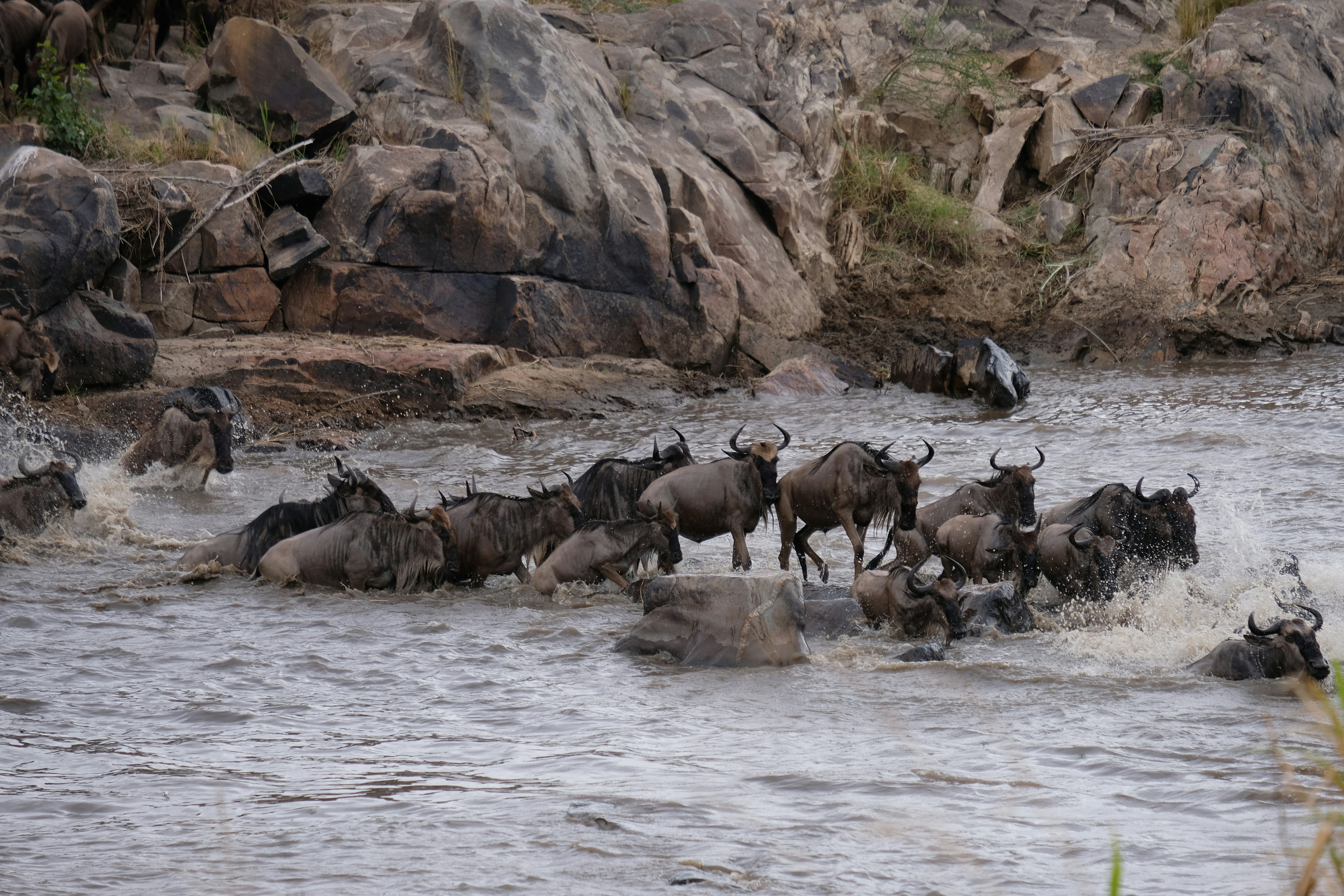
Great Migration River Crossings
Few wildlife spectacles rival watching hundreds of thousands of wildebeest plunge into the crocodile-filled Grumeti and Mara Rivers. Herds gather on the banks for hours before the chaos erupts — crocodiles lunge, wildebeest scramble and the thunder of hooves shakes the ground. Raw, primal and utterly unforgettable.
- Grumeti River crossings June–July, Mara River August–October
- Multiple crossing points across the northern Serengeti
- Expert guides position vehicles for the best views
- Early morning departures maximise wildlife action
 Year-RoundExperience 02
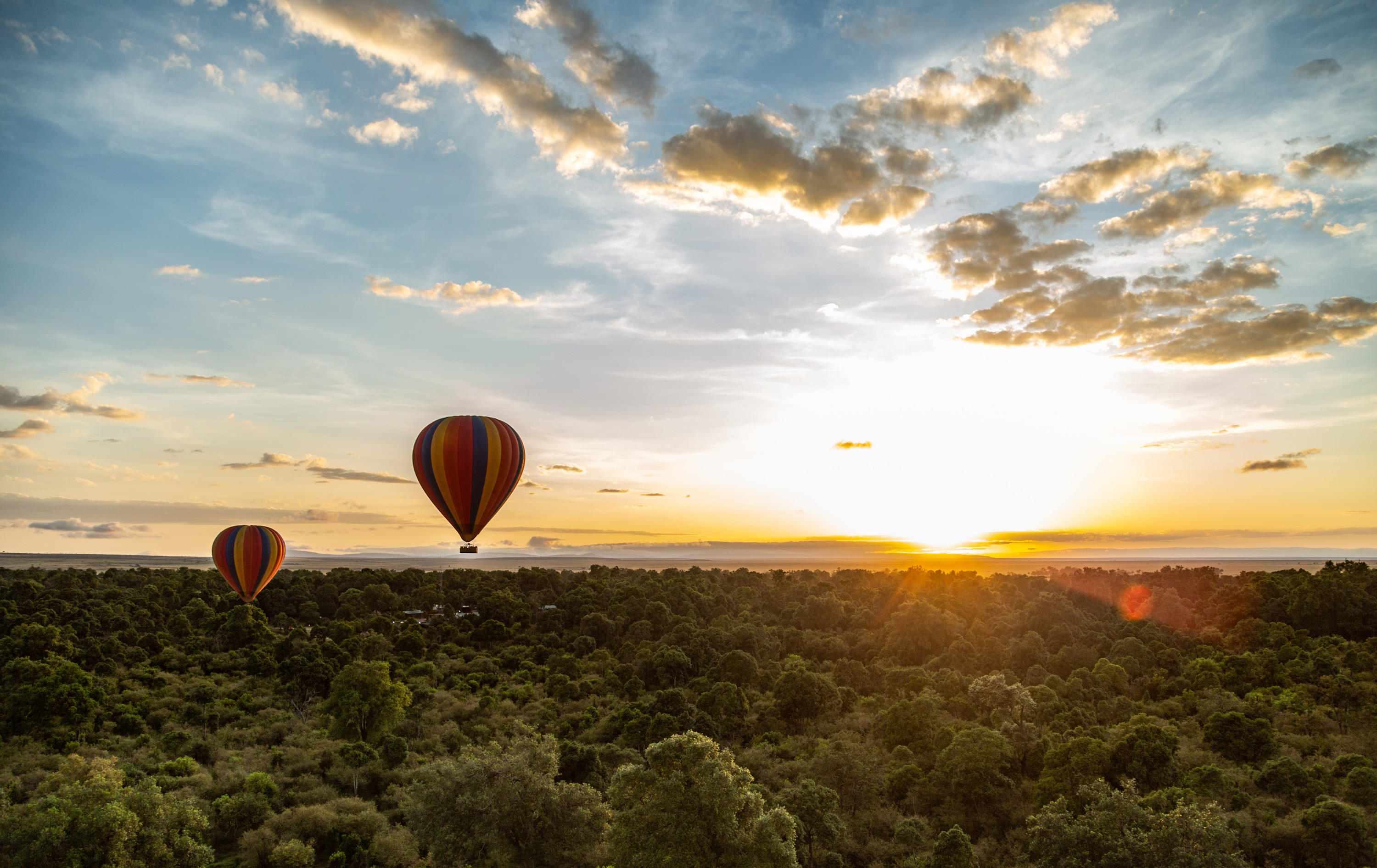
Hot Air Balloon Safaris
Rise before dawn and drift above the endless Serengeti plains at first light — watching wildlife stir below as the horizon glows amber and gold. Your skilled pilot navigates the thermals while you spot wildebeest herds, lion prides and elephant families from an entirely different perspective. The flight culminates in a champagne bush breakfast in the middle of the plains.
- Flights at dawn — roughly 1 hour in the air
- Champagne bush breakfast included post-flight
- Available year-round, weather permitting
- Perfect for honeymoons and special occasions
 Year-RoundExperience 03
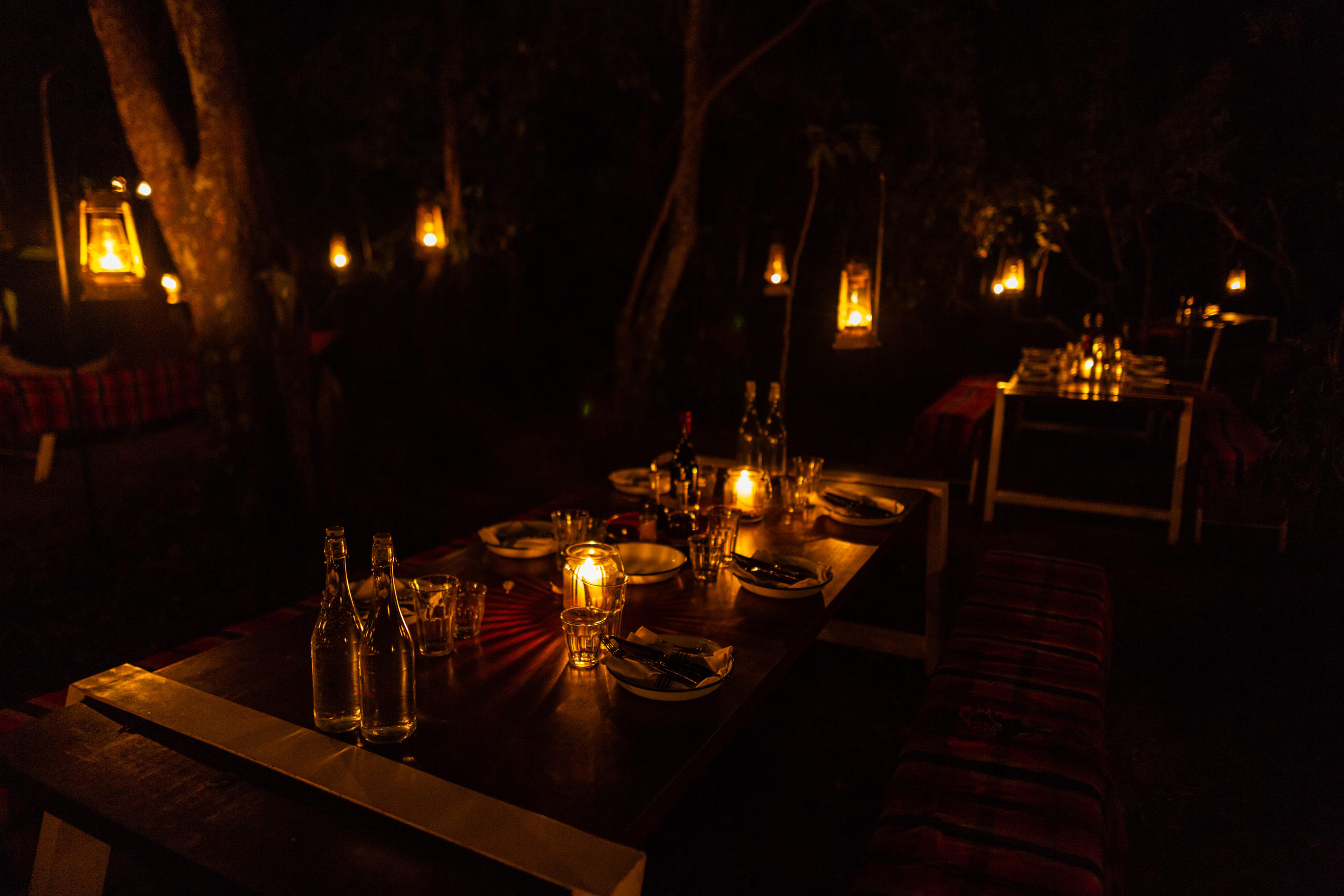
Bush Dining & Walking Safaris
Step out of the vehicle and onto the earth for an entirely different safari dimension. Accompanied by expert armed guides, walking safaris reveal the small wonders of the bush — tracks, insects, plants and the subtle rhythms of the Serengeti that are invisible from a vehicle. End your day with a gourmet bush dinner under the vast African sky, surrounded by the sounds of the wild.
- Guided walking safaris in designated areas
- Gourmet bush dinners under the stars
- Learn tracking, plant medicine and ecological stories
- Sundowner cocktails on the plains at golden hour
 Year-RoundExperience 04
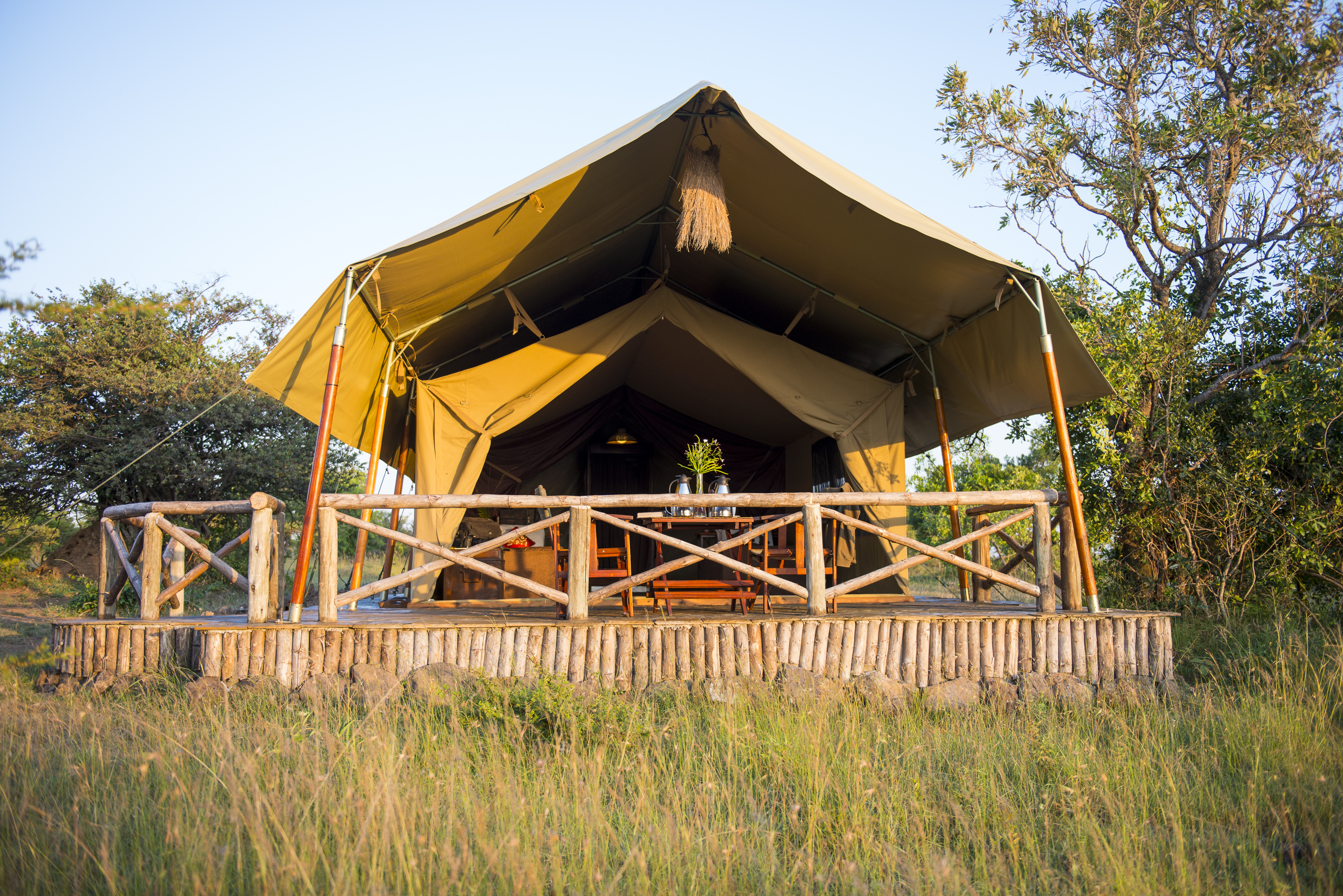
Legendary Lodges & Luxury Camps
The Serengeti's finest lodges and camps are among Africa's most celebrated — vast canvas suites with king-sized beds, outdoor showers, private decks overlooking the plains and some of the most attentive service on the continent. From the iconic Four Seasons Safari Lodge to intimate seasonal migration camps, every stay is extraordinary.
- Private plunge pools and open-air baths
- Gourmet bush dining and sundowner traditions
- Personalised guiding and fully inclusive stays
- Intimate camps with just 8–12 tents
Essential Serengeti Travel Guide
Everything you need to know before you go — from getting there to what to pack for your Serengeti safari.
Getting There
- Flights from Arusha or Kilimanjaro International Airport to Serengeti airstrips (1–2 hrs).
- Road transfer from Arusha approximately 5–7 hours via the Ngorongoro Highlands.
- Fly-in is strongly recommended — far quicker and part of the experience.
- Private charters available between Serengeti regions for seamless movement.
Visas & Entry
- Tanzania eVisa available online for most nationalities — apply at least 2 weeks before travel.
- Yellow fever vaccination certificate required if arriving from an endemic country.
- Valid passport required (minimum 6 months validity beyond travel dates).
- Kudu Untamed Safaris provides full pre-departure documentation assistance.
What to Pack
- Neutral earth tones (khaki, olive, beige) — avoid bright colours in the bush.
- Lightweight layers — mornings can be cool, midday warm on the plains.
- Good quality binoculars and a camera with a telephoto lens.
- Bush flights have strict luggage limits (15kg soft bag only — no hard cases).
Health & Safety
- Malaria prophylaxis strongly recommended — consult your travel clinic before departure.
- All reputable Serengeti camps have emergency medical protocols and evacuation procedures.
- Travel insurance with medical evacuation cover is essential.
- Bottled water provided by all camps — tap water is not safe to drink.
Costs & Fees
- Park entry fees: approximately USD 70–100 per person per day (varies by season).
- Luxury camp rates: from USD 500 – 2,000+ per person per night.
- Hot air balloon flights: approximately USD 500–650 per person.
- Kudu Untamed Safaris provides full transparent pricing with no hidden fees.
Trip Duration
- Minimum 4 nights recommended for the Serengeti — 5–7 nights is ideal to explore different regions.
- Combine with Ngorongoro Crater (2 nights) for the ultimate Tanzania itinerary.
- During Migration season (Jun–Oct), book as early as possible — camps fill up a year ahead.
- Our team can design 7–21 day tailor-made itineraries for all travel styles.
Serengeti Safari — FAQs
Our team answers the questions we hear most often from guests planning their first or return Serengeti safari.
June to October is peak season, when the Great Migration gathers in the northern Serengeti and river crossings occur regularly. August and September offer the most dramatic crossings. However, January to March is calving season in the southern plains with exceptional predator action and far fewer crowds. The Serengeti rewards year-round visits — every season delivers remarkable wildlife.
Both are part of the same ecosystem and offer world-class safari experiences. The Serengeti is vast (14,750 km²) with diverse landscapes, calving season spectacles and a sense of endless wilderness. The Maasai Mara is smaller but incredibly rich in wildlife and the premier destination for river crossings. Many of our itineraries combine both for the ultimate Migration experience across borders.
Absolutely. Many Serengeti camps are family-friendly and offer dedicated children's programmes, junior ranger activities and family suites. The park is excellent for families as wildlife is abundant and game drives are highly active. We recommend the dry season for family visits, with camps that have in-house child-minding services and shallow swimming pools.
Yes — all Big Five species are present in the Serengeti. Lions, leopards, elephants and buffalo are seen regularly across multiple regions. Black rhino are present but sightings are rarer — the Serengeti's rhino population is concentrated in the Moru Kopjes area and specialist guides know where to find them. The Serengeti has the highest concentration of big cats in Africa, making predator sightings extraordinarily reliable.
Most visitors take scheduled bush flights between the Serengeti's airstrips (Seronera, Kogatende, Grumeti, Ndutu) to move between regions efficiently. Driving between areas is possible but takes several hours. Kudu Untamed Safaris typically recommends a combination of driving for game-viewing transfers and fly-in for longer distances, maximising your time in the bush.
During peak Migration season (June–October), the best luxury camps book up 10–18 months in advance. We recommend contacting us at least 9–12 months before your intended travel dates for peak season. For calving season (January–March) and shoulder months, 3–6 months notice is usually sufficient, though popular camps fill quickly. Contact our team as early as possible.
Don't see your question here? Our specialists are happy to help.
Ask Us AnythingReady to Experience the
Serengeti?
Our East Africa specialists are ready to craft your perfect tailor-made Serengeti safari — from camp selection across the plains to day-by-day itinerary planning.